

Recently, a few of my favorite ongoing series wrapped up their very successful second seasons with announcements they’ll be back for just one more. Paradise and The Last of Us will call it quits after their upcoming third seasons, while Silo will end after four, but they’re filming seasons three and four simultaneously to preserve the kinetic arc of the trilogy of novels on which the show is based.
Don’t get me wrong. I enjoy more of a good thing just as much as the next person, but I respect the hell out of creators who have enough restraint and artistic integrity to map out a cohesive narrative and stick with it, even when success dangles the temptation of an endless run, which almost never ends well.
Best of the Least
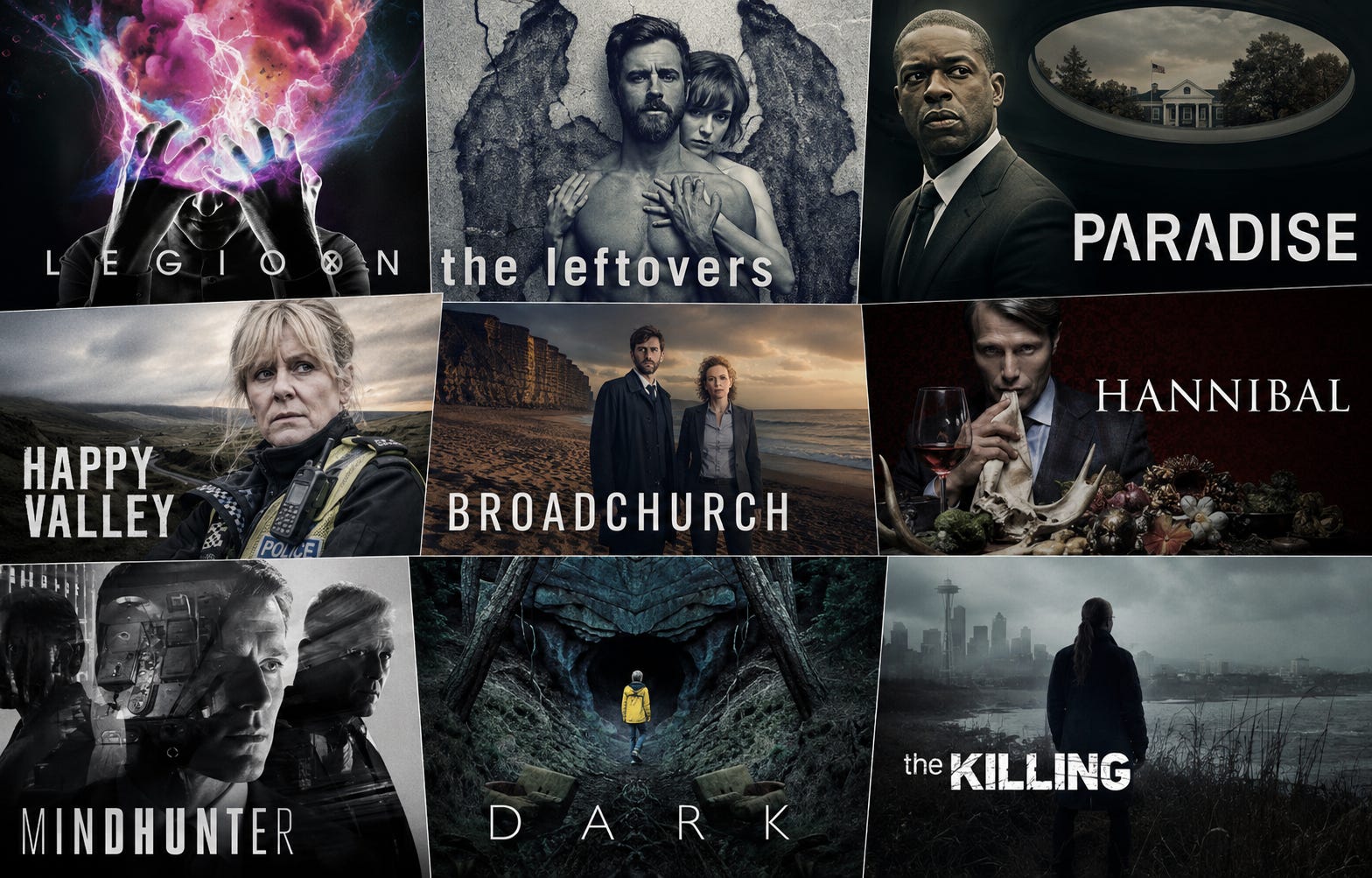
Some of the best TV dramas of all time have ended intentionally, on their own terms, after an incredibly strong and comparably brief run of three seasons:
Legion:
The platonic ideal of a perfect three season arc. Criminally underseen, with even diehard Marvel fans unaware this masterfully original standalone series ever existed. Legion was so creative, so cool and weird, it made you feel as batshit crazy as the main character at times, questioning what if anything you were watching, was “real.”
Arguably that kind of plate spinning magic is unsustainable on a long enough timeline, but creator Noah Hawley never planned to keep it going indefinitely. Go watch the trailer and if you’re still not convinced, I’ll drop it… Maybe.The Leftovers:
Every season of this show wrapped up in a satisfying conclusion that would have left fans wishing for more, but not bitter that they were left with unanswered questions or unfinished character arcs. They told us upfront, we’re never going to answer the BIG question this show is based on. Then they took us on a wild ride with an emotional pay off that was better than we could have hoped.The Killing:
If you could hang with with the initial trauma and bleakness of the first episode, which delivered an emotional gut punch, and promised unprecedented levels of unrelenting, rain-soaked darkness and suffering, this show held together on the pure, intense chemistry of its co-stars, Joel Kinnaman and Mirielle Enos, and a stellar supporting cast that included Michelle Forbes, Peter Sarsgaard, and Brent Sexton.Dark: Tailor-made for the generation that was primed to think in multiverse terms, this show was unbelievably smart, challenging, brilliantly crafted, and utterly baffling. Despite its insanely convoluted multiple-timeline story, which by season three was like a madman’s murder board of interconnected quantum plot lines, Dark stuck the landing exactly as intended, leaving no doubt that every step was intentional.
Happy Valley and Broadchurch: Two of the most perfect British crime dramas of the mid-2010s. Broadchurch stars the impeccable David Tennant and Olivia Colman. If you haven’t seen these shows and you love a tightly-crafted, perfectly acted murder mystery that ends exactly when it should, I highly recommend both.
The British have always understood the value of a shorter, more impactful arc that leaves the audience sated, not overstuffed.
Cancelled Too Soon
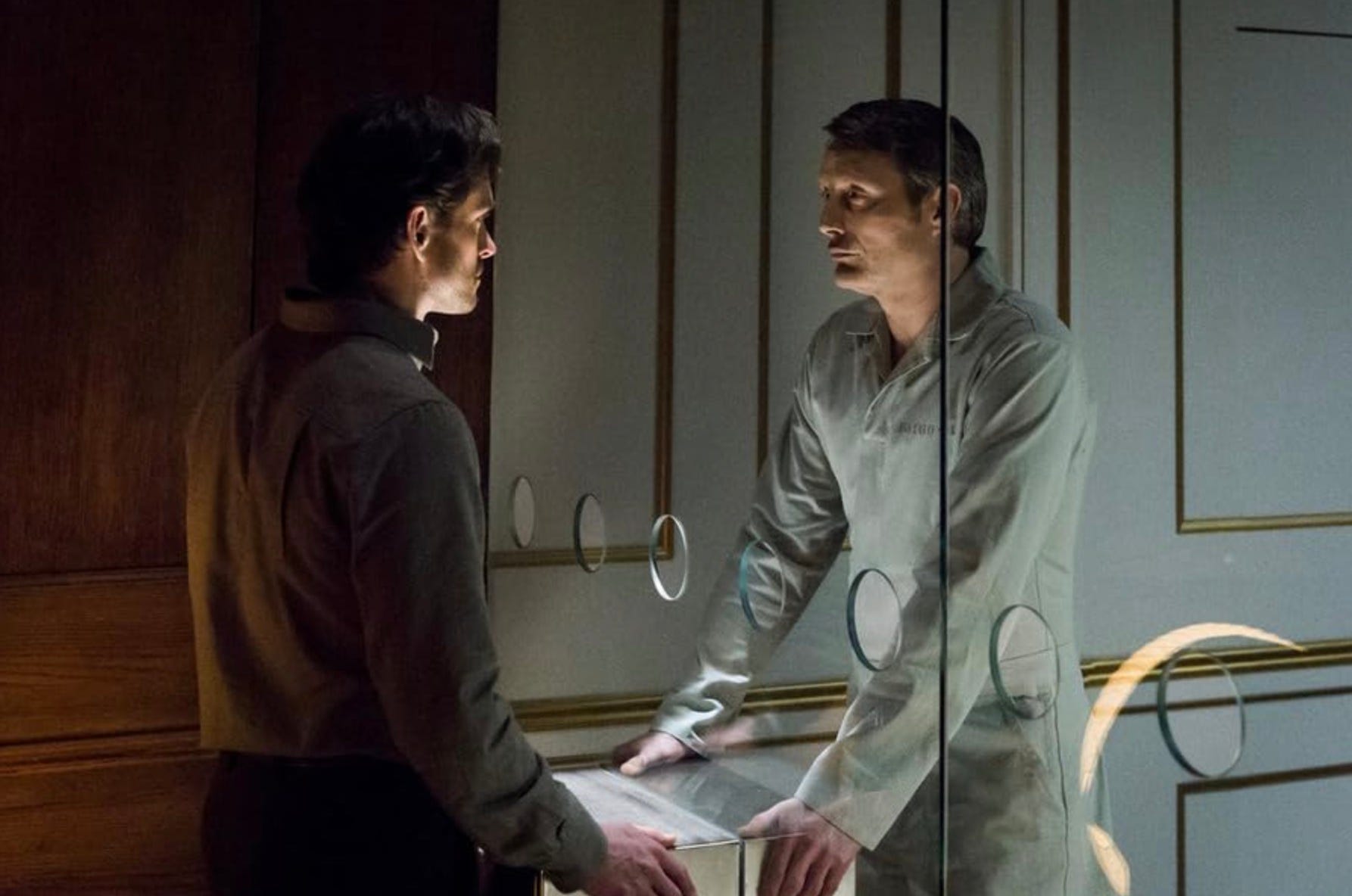
If you were looking closely at the header of this post, you may have noticed that I included Hannibal, one of my favorite shows of all time. The lush cinematography, the gorgeous musical score, the mythic absurdity of murder and cannibalism on the surface, with the not-so-subtle subtext being the ultimate impossible love story… Serial killers as tragic Olympian gods/monsters.
Hannibal started out at a nine and sustained an incredibly intense pace for two seasons, only to crank up the emotional impact and blood-soaked, surreal-gothic imagery to 11 in the third season.
It did indeed end after three seasons, but not because the showrunner Brian Fuller, or any of the ridiculously talented cast (including Mads Mikkelson, Hugh Dancy, Gillian Anderson, Laurence Fishburne, and Gina Torres, among others) wanted it to.
Bryan Fuller meant for Hannibal to last at least four or five seasons, and die-hard fans are still holding out the faintest hope that one day they’ll come back to wrap things up like an exquisite meal of mysterious origin, not on the literal cliffhanger that ended season three. (It was still one of the best season finales of any show, ever.)
It’s absolutely mental that this show ran on NBC, given what they got past the censors. Somewhere, in an alternate universe, we got the Netflix or HBO version of this show, and I often wish we lived in that universe.
Mindhunter didn’t even make it to season three before the cost of production outweighed the benefits of viewership. Maybe in 2017 and 2018 there was just too much excellent television out there to compete, and this perfect gem of a series got lost in the shuffle. It’s still on Netflix for anyone who hasn’t seen it, and you can burn through the entire series in a weekend.
On the Other Hand
I’m not saying there’s anything inherently better about a short three- or four-season arc. Some other excellent shows, like Severence, Fallout, and The Pitt, have just been renewed for a third season, and show no signs of slowing down or wrapping up any time soon. Long may they reign!
Many of the best shows of all time took five or six seasons to tell a complex, and completely satisfying story. Think The Wire, Breaking Bad, and The Sopranos. Succession and The Good Place were four seasons, and Mad Men was a perfect seven.
Comedies are a completely different animal. The Simpsons has been going strong (your mileage may vary) for 36 seasons. South Park, 27. Granted those are animated series, so they don’t have to worry about an aging cast or salary demands.
Although the best comedy series—say Parks and Recreation, 30 Rock, Cheers, Friends, Veep, Hacks, and so on—mix laughs with pathos, allow their characters to evolve over time, and introduce new cast members, maybe even change locations to keep things fresh, they always rely on formula and repetition, whereas dramas must constantly move the story forward.
A Multiverse of Meh
For years, the Hollywood machine has leaned into more is better, the “cinematic universe” approach, churning out content based on existing IP and pumping more and more money into its successful franchises until we grow to hate them.
Consider the vitriol that Marvel Studios faced when announcing Robert Downey Jr., who heroically died as Iron Man in Avengers: Endgame, would return to play Dr. Doom. The message from superfans was clear: sometimes it’s better to stay dead.
Why struggle to conceive and market a brand new idea when you can remix and repackage a long-dead, fondly remembered series (Arrested Development, Dexter, Frasier, Roseanne, That 70s Show, Twin Peaks, Will & Grace)? Because the reanimated corpse never comes back the way we remember them.
And then there are the endless spin-offs and reboots of shows we once loved, which keep hitting the “continue” button long after the magic is gone. Even the most devoted Star Wars fan must, at some point, think enough is enough.
But when a show’s popularity outpaces its creativity, it can hobble along without a clue where it’s headed long after it should have ended. The toxic blend of greed and hubris (Game of Thrones) or sheer delusion (The Walking Dead) can squander the love and devotion of a massive early success until, by the end, what we once adored is a shambling, undead shadow of its former self.
The lesson to show runners? The same as every zombie movie teaches us. Kill off your darlings before they turn into something grotesque.
Did I miss your favorite short-run television masterpiece? Tell me in the comments!