

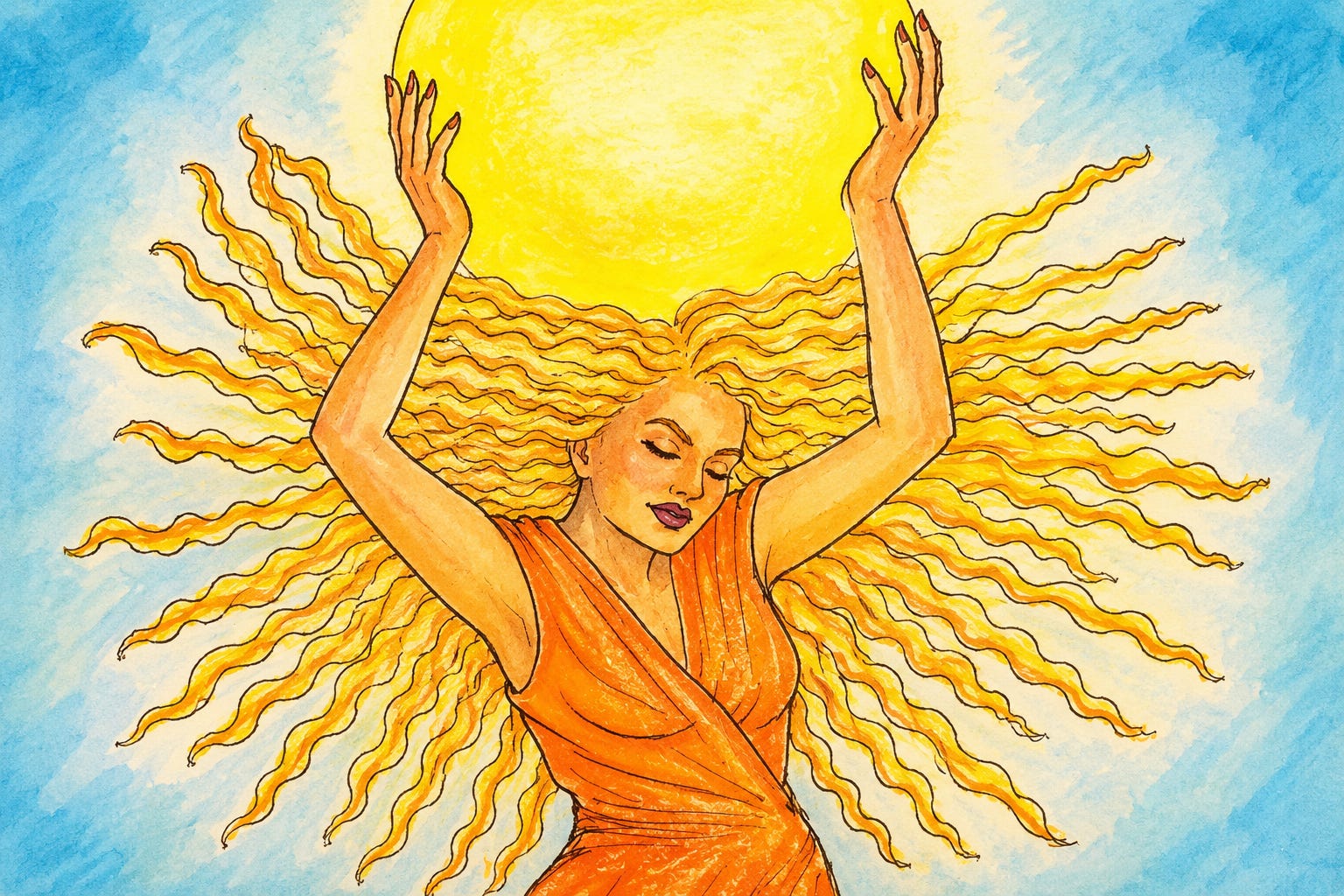
The sun, that life-giving ball of flaming plasma, the radiant center of our solar system, powered by nuclear fusion… In the grand scheme of the universe and all the stars in it, our star isn’t the biggest or the hottest, but it’s everything to us.
Without the sun, we wouldn’t have the gravity that keeps all the planets in our system (the fam) in orbit. We wouldn’t have daytime illuminated by its light, or liquid water warmed by its heat. Nor would we have ocean currents to power the cycle of photosynthesis, which is the basis of the food chain that makes all life on earth possible.
From the very origins of human exploration and inquiry, we’ve sought to understand the nature of our sun. We studied the seasons and predicted the best time to plant crops and preserve food for the winter. We used the path of the sun, and the other stars, to navigate and find our way across all the continents and oceans.
We measured the angle of the sun’s path across the sky throughout the year and used those calculations to determine the size and nature of our world.
Solar Goddesses
Nearly every culture on earth has revered and worshiped the sun in one form or another. While most religions cast a male deity in the role of solar mascot—Ra in ancient Egypt, Helios in ancient Greece, Surya in the Hindu pantheon, and Sol Invictus in the Roman—there are a great many sun goddesses in the world’s mythologies.
Some are traditional rulers of the greatest light in the heavens, with all the power and prestige that would imply, while others are explicitly associated with sunlight, the dawn, or the life-giving power of the sun.
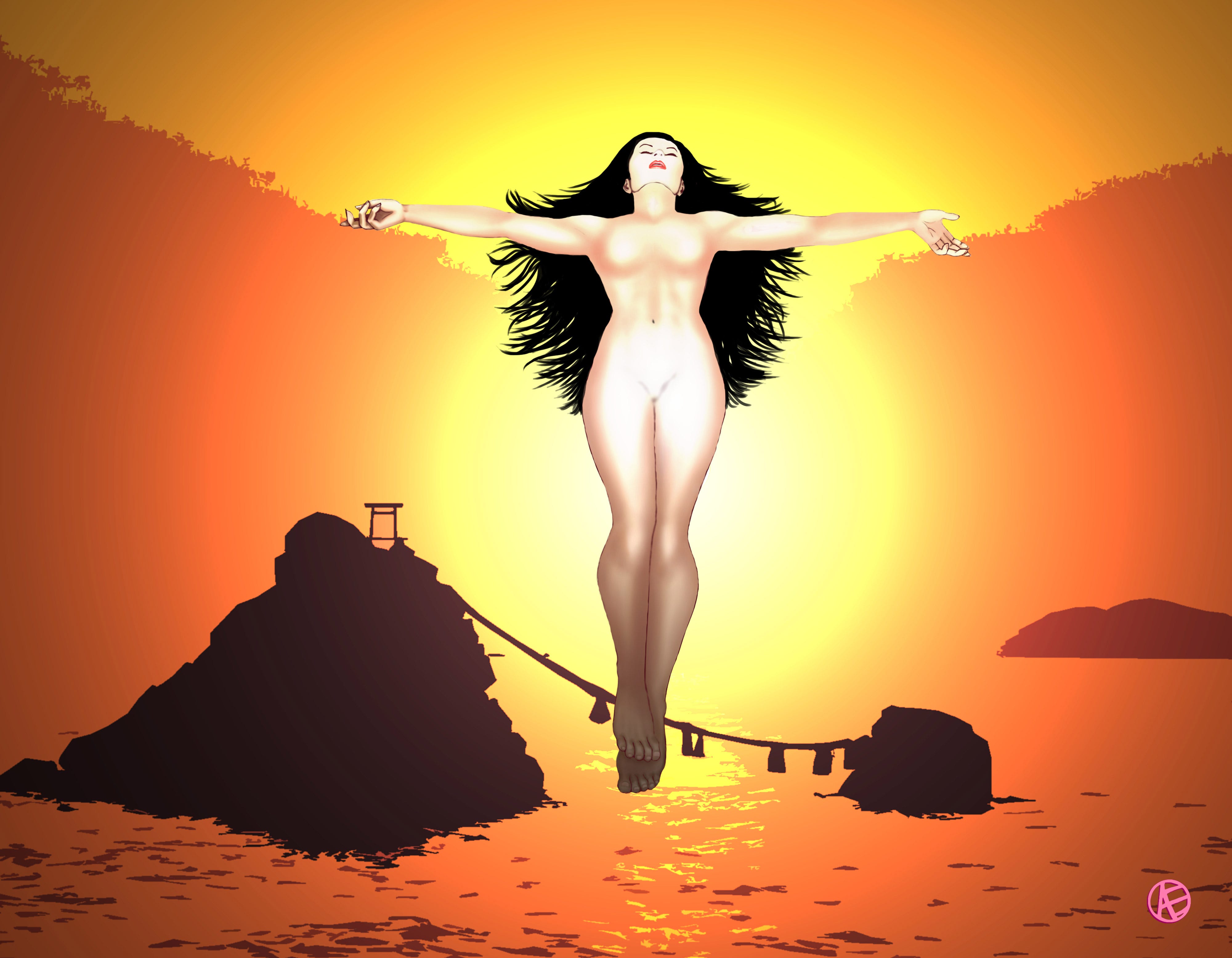
Amaterasu
One of the most famous solar deities in the world, Amaterasu of Japan is the the supreme Shinto sun goddess and ruler of the heavens. Her name means “Shining in Heaven” or “Heaven’s Illuminating Force.”
She was born from a tear in the creator Izanagi’s left eye, while her brother, Tsukiyomi, the Moon God, was born from his right. Her youngest sibling, Susanoo, was born from his nose, and was sent to rule the sea plain as the storm god.
Sól (Sunna)
In the Norse pantheon of gods, Sol is the radiant goddess who drives the chariot of the sun across the sky while being pursued by a wolf. (There’s always a wolf in the Norse myths!)
She’s also called Sunna in Germanic mythology, one of the few religious traditions where the sun is considered female and the moon is male.
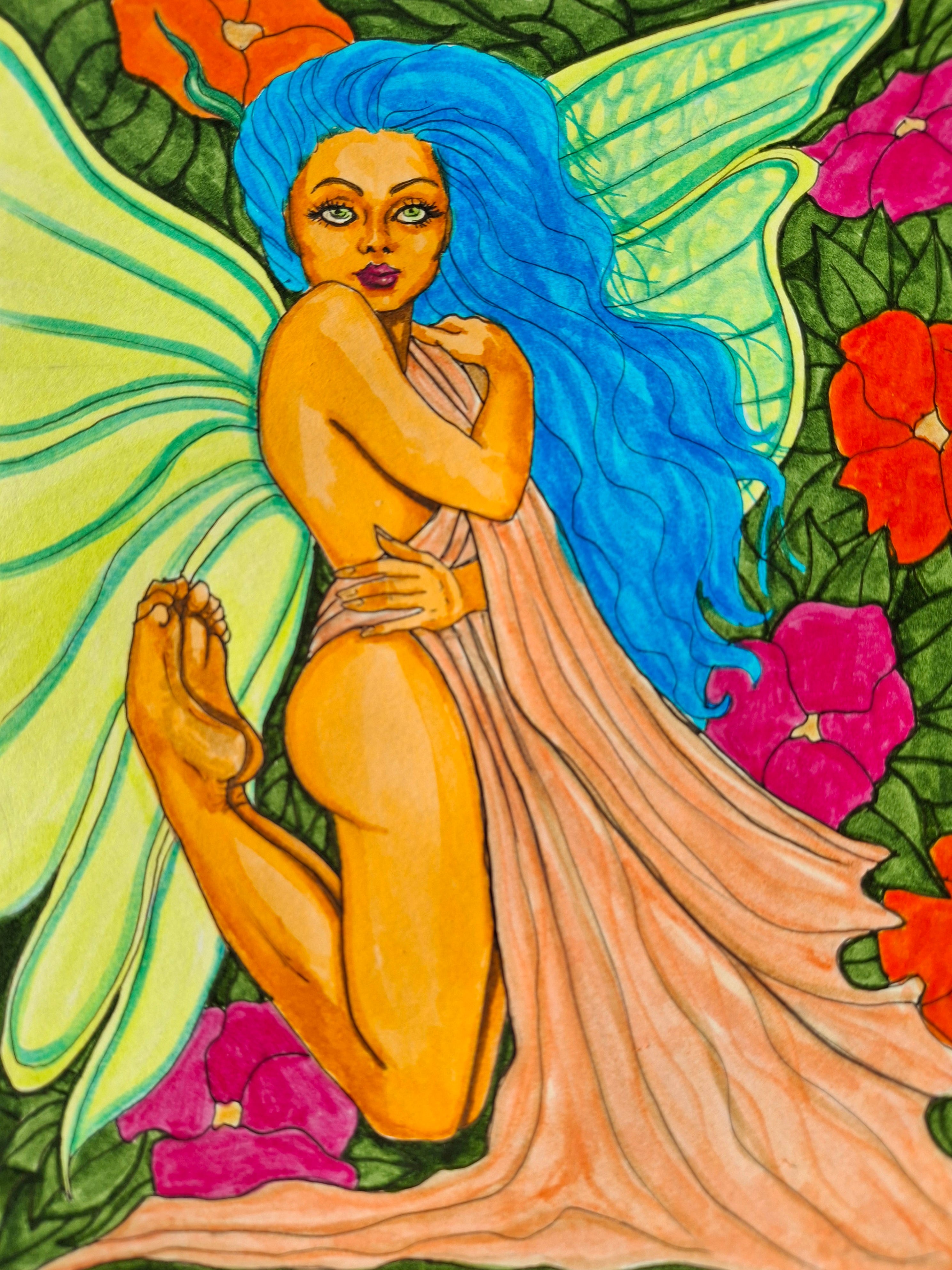
Áine
Ireland’s goddess of summer, sunshine, fertility, and prosperity, she is closely connected with the warmth of the summer sun. Not only is Áine a goddess of the sun, she’s the queen of the fairies, and the mother to many half-human offspring due to her irresistible charms and proclivity for seducing mortal men.
Aurora
The Roman goddess of the Dawn, and personification of the morning light. She crosses the sky every morning in her chariot to announce the arrival of the sun. Her Greek counterpart is Eos, and her name forms the root of the northern lights (aurora borealis).
A Trio of Egyptian Goddesses
It’s no surprise that Egypt had several deities associated with the sun, given its importance in ancient Egyptian mythology.
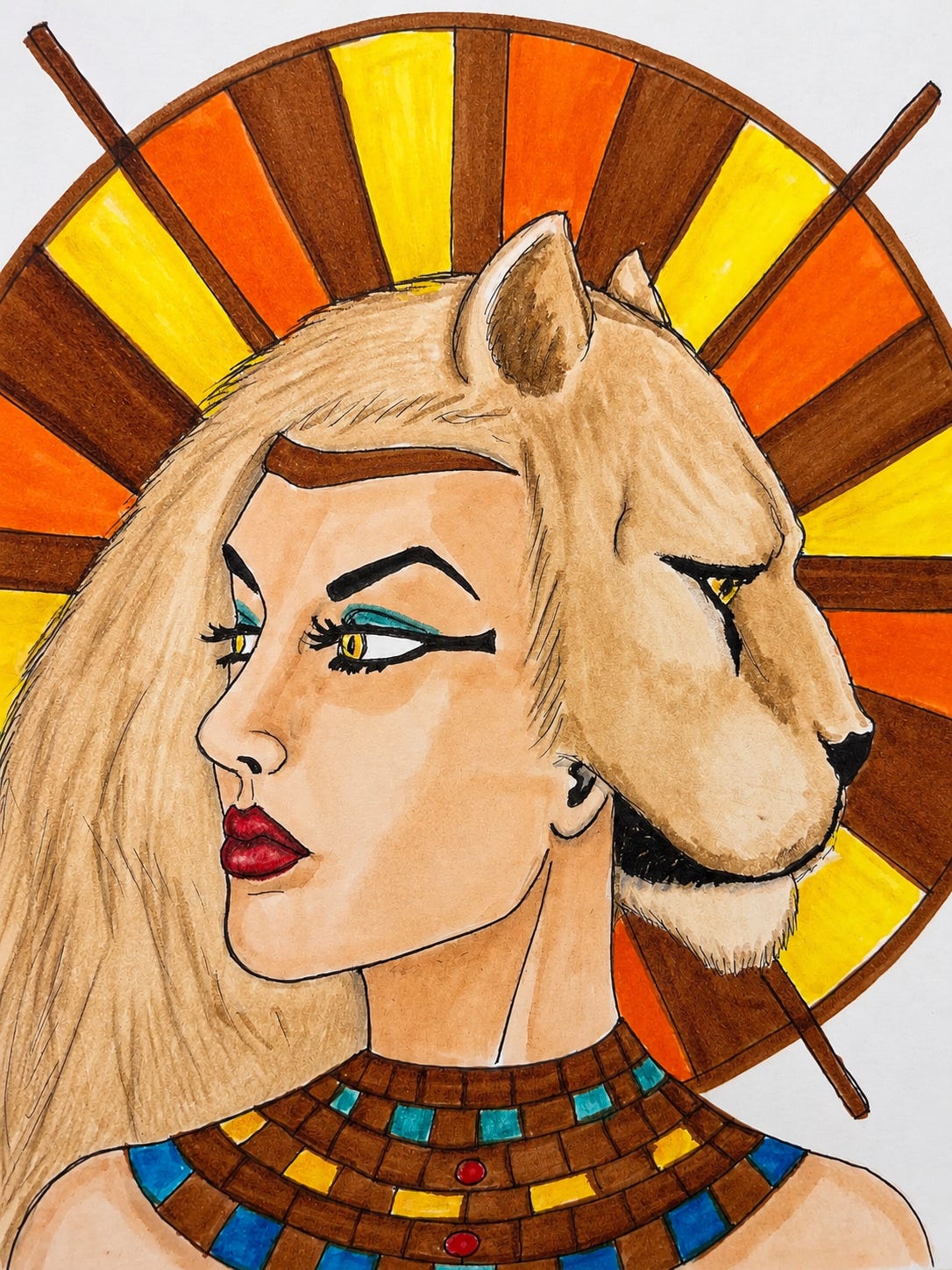
Sekhmet
Daughter of the sun god Ra, the lion-headed goddess. She embodies the fierce, scorching power of the midday sun.
Hathor
She is often called the Eye of Ra, and she is associated with the nourishing warmth and radiance of the sun.
Bastet
The cat goddess of ancient Egypt, closely associated with lions, the king of the jungle and solar avatar of the animal kingdom, and later with domesticated cats, which were famously revered in Egypt. She was connected with the gentle warmth and protective aspects of sunlight.
Leo Season
Leo season runs from July 22 to August 22, and this fixed fire sign is ruled by the sun. Leo season invites you to revel in all things associated with the solar; confidence, creativity, passion, leadership, and courage. Step into the spotlight, express yourself openly, be joyful, and lead with your heart.