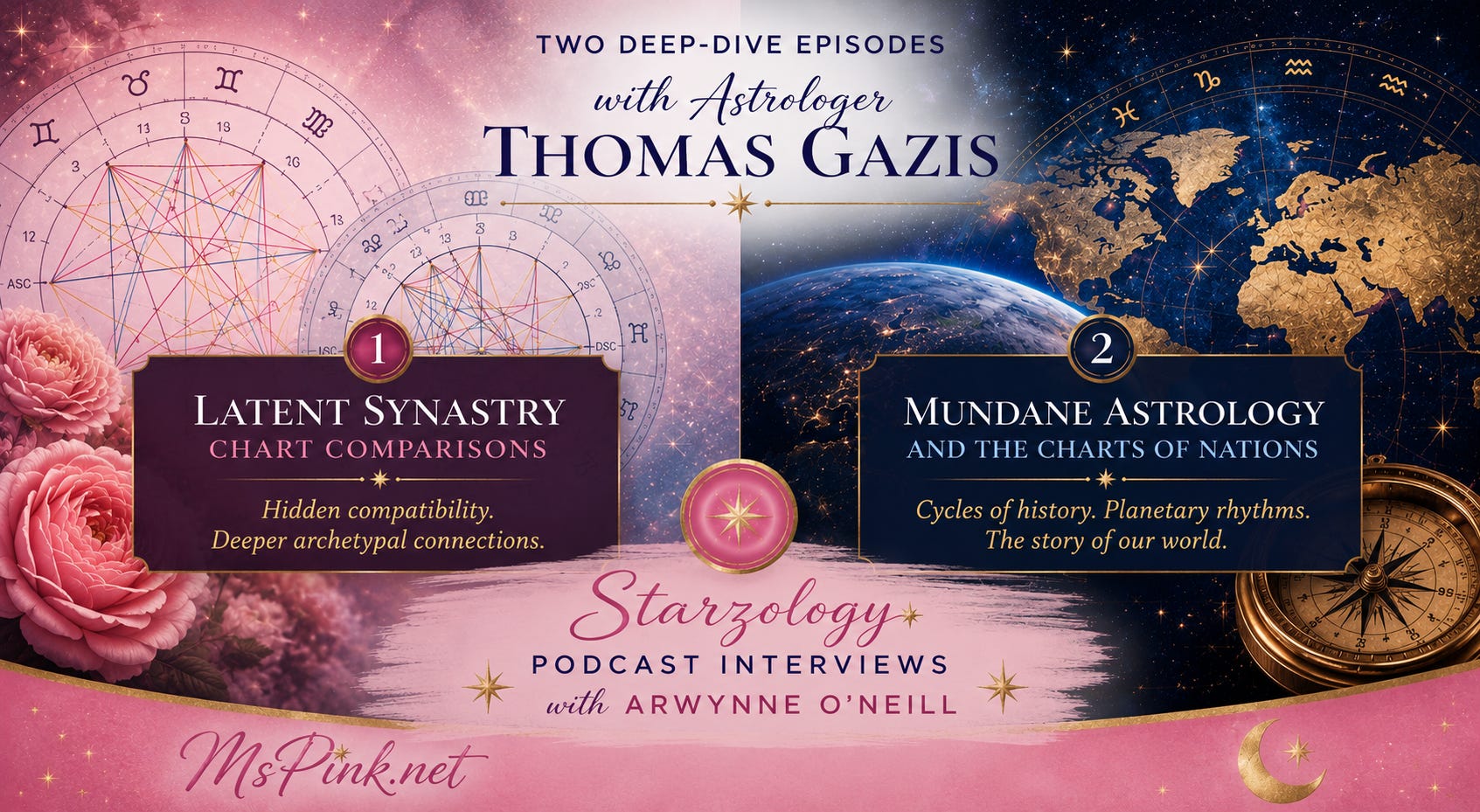
I recently interviewed Greek astrologer Thomas Gazis for the Starzology podcast. In this two-part discussion, we did a deep dive into two areas of astrology that are close to Thomas’ heart, a relationship analysis technique he calls “latent synastry,” and mundane astrology, the study of nations and historical cycles.
Perhaps not coincidentally, these are also two topics I find fascinating! In case you missed these interviews, make sure you’re subscribed to the Starzology podcast, and check out the original posts linked below for more details and all the specific charts discussed.
I’m reposting several interviews here this month while I’m recovering from a fractured wrist, which makes typing with both hands a challenge.
Part 1: Latent Synastry Chart Comparison Technique
Listen here: Latent Astrology with Thomas Gazis
Read the Starzology post to see all the charts mentioned in this episode
In this episode, I spoke with Thomas Gazis about his innovative concept of latent synastry, a technique that reveals hidden compatibility between partners whose charts might appear mismatched at first glance.
Gazis explains that many successful couples do not fit traditional astrological expectations based on Sun sign compatibility. Through decades of observation, he noticed long-lasting relationships between seemingly incompatible signs like Taurus–Aquarius or Cancer–Libra.
To explain this phenomenon, he developed the idea of archetypal affinities—connections that arise when planetary placements in houses express the energy of particular zodiac signs.
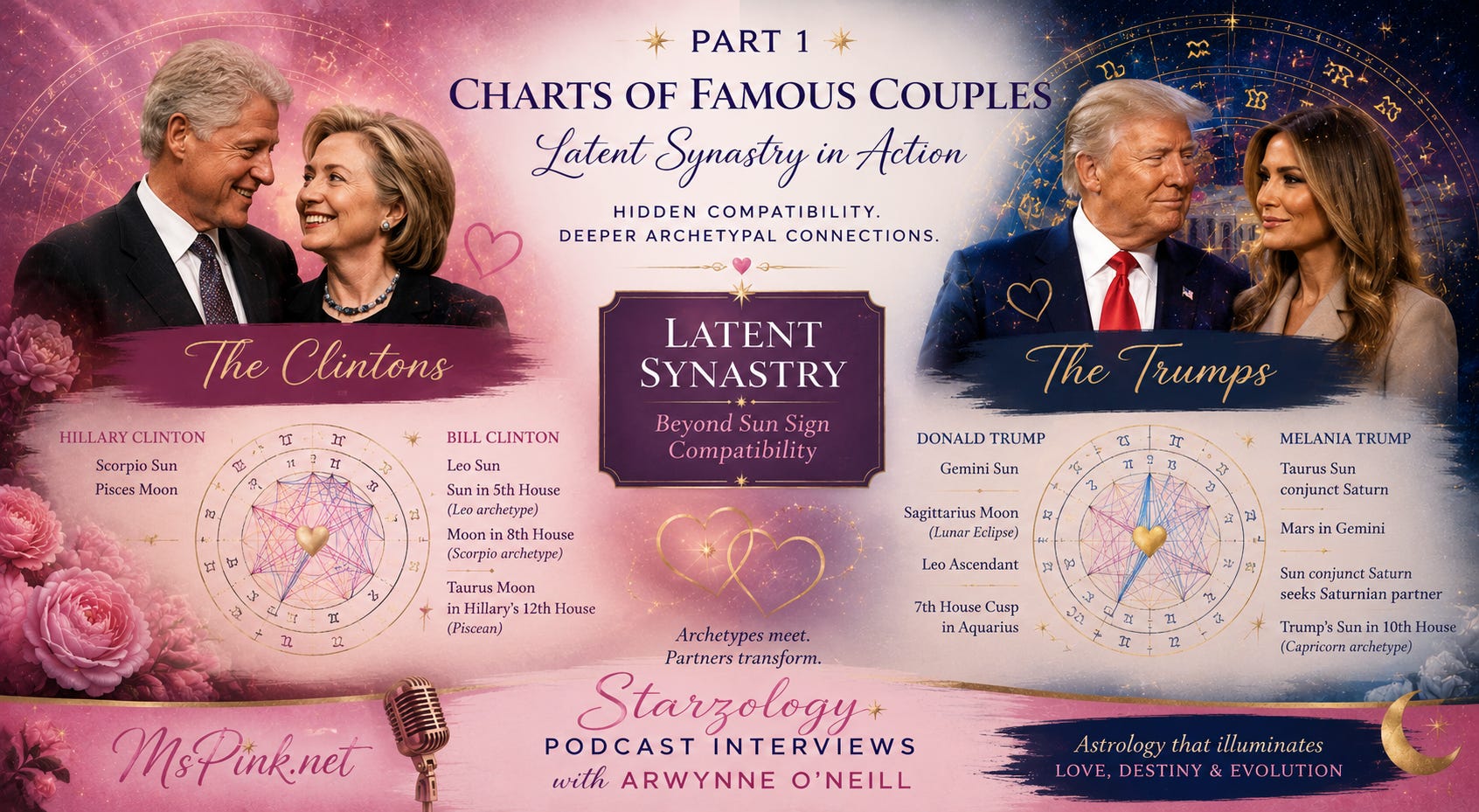
For example, someone with the Sun in the 5th house may embody Leonine qualities, as the 5th house is naturally Leo’s house, while a Moon in the 8th house may express Scorpionic depth, since the 8th house is the natural house of Scorpio. These parallels can create powerful bonds between partners even when their Sun signs clash.
Gazis illustrates the concept with examples from well-known couples, showing how house placements and planetary connections can replicate sign archetypes and create deeper compatibility. He also emphasizes that synastry should never be judged by Sun signs alone.
Progressed Charts
Another theme we discussed is the importance of progressed charts in relationship analysis. As we constantly evolve throughout our lives, progressions reveal how we grow and change over time. As two people’s progressed Suns change signs over the course of 30 years, for example, the emotional and psychological dynamics within their relationship will naturally transform as well.
Beyond technique, Gazis reflects on the deeper meaning of intimate relationships. Rather than existing purely for happiness or entertainment, he argues, intimate partnerships serve a profound evolutionary purpose, requiring individuals to transcend ego and undergo personal transformation.
We agreed that modern dating apps risk reducing relationships to transactions like online shopping—or worse, gambling—weakening the mysterious and transformative qualities that these meaningful connections hold in favor of a system that serves the algorithm and keeps people swiping for the next dopamine hit.
Part 2: Mundane Astrology
In the second episode, we turned our attention to mundane astrology, which is the application of astrology to the study of nations, world events and historical cycles.
Listen here: Mundane Astrology with Thomas Gazis
Read the Starzology post
Gazis explains that his approach has been shaped by influential thinkers like Dane Rudhyar and Richard Tarnas, while also drawing on his own decades of observation.
We discussed how the cycles and connections between the outer planets describe distinct historical trends and political movements, while their transits through particular signs reflect shifts in collective human experience.
In particular, he emphasizes the significance of outer planets moving through the final quadrant of the zodiac—Capricorn, Aquarius, and Pisces—which are considered the collective or societal signs.
Gazis shares his long-standing concern about the implications of Pluto’s movement through these signs. While many astrologers have celebrated Pluto’s entry into Aquarius as a harbinger of innovation and democratic progress, Gazis argues that Pluto’s destructive influence must always be considered.
Similar to the way Pluto in Capricorn saw a global breakdown in once-trusted institutions and authority figures, Pluto in Aquarius will intensify darker collective dynamics, including technological warfare, social upheaval, and heightened global tensions in the areas of AI, automation, the meaning of collective truth and the divide between haves and have nots.
Planetary Resonance Cycles
Another major theme of our discussion is the idea of planetary resonance cycles, particularly a roughly 500-year pattern Gazis has identified in which several outer planets return to similar zodiacal positions.
He notes striking parallels between current planetary placements and those present in the early 16th century, when European colonial expansion began reshaping the world. He talks about how he feels Europe is now entering a period of cultural and geopolitical decline.
Throughout our conversation, Gazis illustrates how studying historical parallels in planetary cycles can help us anticipate major collective developments—from global conflicts to shifting centers of cultural power—while reminding us that the full meaning of these planetary patterns often only becomes clear in hindsight.
For More Thomas Gazis Online:
Gazis is a prolific writer and astrologer, covering political topics and exploring a variety of astrological techniques. Check out his website here:
Next Week:
I’ll be reposting my interview with New York based astrologer and tarot card reader Cardsy B! It’s a great conversation, so I’ll see you back here next Saturday.
In the meantime, make sure you’re subscribed to the Starzology podcast!