

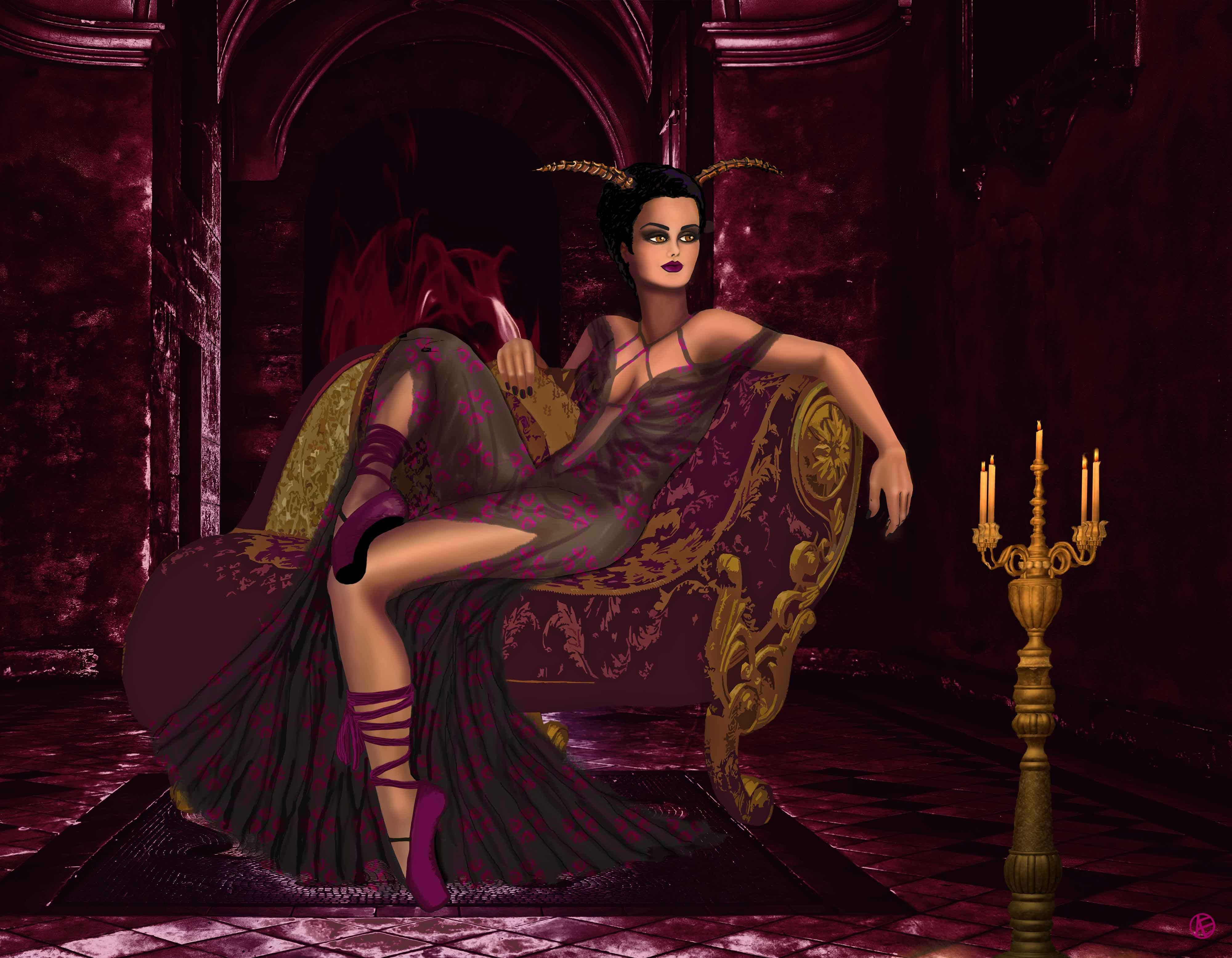
Persephone was the young daughter of Demeter, the Greek goddess of agriculture and fertility, whose counterpart in Roman mythology is Ceres. Persephone is also known as Kore, which means “maiden.” Her father was none other than Zeus, the king of the gods.
Kore was frolicking in the woods one day when Hades, the king of the Underworld and one of Zeus’ brothers (best not to read too much into the Olympian family tree), took notice of her beauty and lured her down to the Underworld. Some say abducted, some say lured… Issues of consent are often murky in these myths. Bear with me.
Demeter wandered the earth in search of her daughter. When she realized what had happened, she petitioned Zeus to get her daughter back, but at first Zeus refused to confront his brother in the realm of the dead.
In her grief, Demeter neglected her fields, causing the crops to wither and die. The earth entered a period of barrenness and perpetual winter. Finally, Zeus intervened and ordered Hades to return Persephone, but while she was in the Underworld, she had eaten six pomegranate seeds (a symbol of fertility), which bound her to Hades.
Shared Custody
As a compromise, Persephone returned to the world of the living for half of every year, ensuring that her mother would allow the crops to flourish and the flowers to bloom. When her daughter returns to the surface every year, spring arrives, and the earth becomes fertile again.
Six months later, when Persephone descends to the Underworld, Demeter mourns and the world endures the temporary death of winter.
But for the time she spends with Hades, Persephone is recognized as the as the Queen of the Underworld, a powerful goddess associated with the afterlife and the mysteries of death and eternal life.
Persephone and Demeter are associated with the Eleusinian Mysteries, ancient initiations held every year involving powerful wine mixed with hallucinogenic plants. The ceremony involved conjuring visions of Persephone’s journey to the Underworld, and her return to the land above, symbolizing the cycle of death and rebirth.
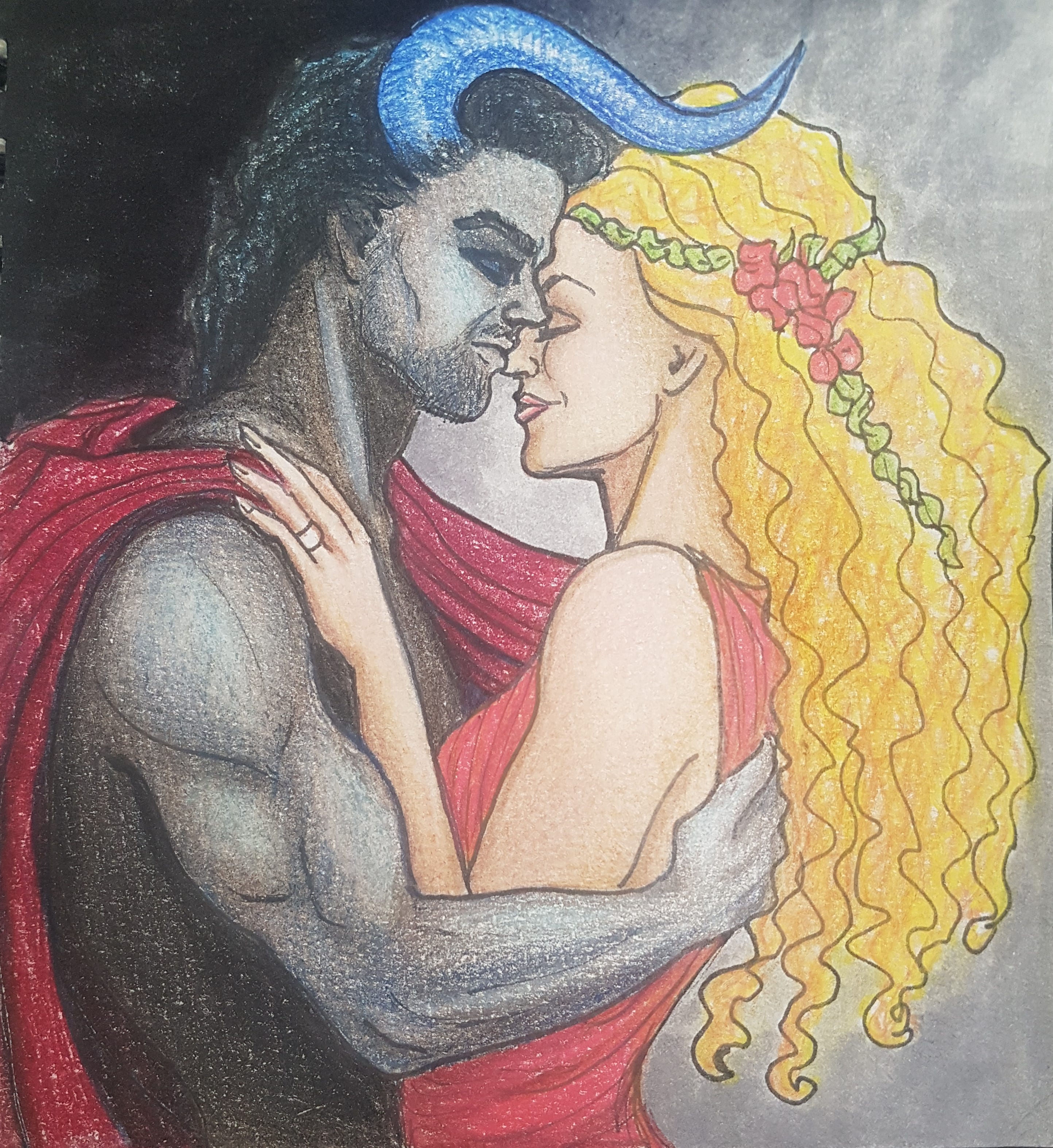
In popular culture, the myth has evolved into something far more romantic and, as we say these days, spicy… Less of an “uncle abducts underage girl” and more of a tale of temptation, sexual awakening and forbidden love.
Hades is dark and dangerous, powerful and intense, and Persephone is a fledgeling goddess in her own right. She can only truly come into her full power and maturity by cutting the ties that bind her to the world of the living, and her mother’s protection.
In the end, she gets the best of both worlds, quite literally. In the spring and summer, she is a goddess of rebirth and hidden knowledge, bringing life to the earth after the long fallow hibernation of the cold months of winter.
While above, she shares her mother’s realm and they rule the land of plenty. Both goddesses are worshiped as bringers of life and fertility, a vital role that’s appreciated all the more because of its fragility and impermanence.
When she descends to the Underworld, she rules at the side of her mate, as the queen of the dead—not a captured wife, but a co-ruler. When Hades appears in Homer’s epic poems, Persephone is always at his side.
No Light Without Darkness
I’ve been thinking a lot about this myth over the last week, since the news of Tim Curry’s passing. He’s probably best known for his iconic role as Frank in The Rocky Horror Picture Show, but I always loved him as Darkness in Ridley Scott’s Legend.
Legend is not necessarily a great movie, but it’s an incredible work of visual filmmaking, and Tim Curry is utterly transcendent the lord of the underworld, tempting the beautiful and innocent Lily to stay with him and be his queen.

Darkness: “I've found my true mate and you know it. Beneath the skin, we are already one. Was it not your sin that trapped the unicorn? Even now the evil seed of what you've done germinates within you.“
Lily: “You are nothing but an animal!”
Darkness: [laughing] “We are all animals, m’lady.”
Pure fantasy fuel for a young girl with mythology and romance in her heart and a synth-pop emo soundtrack playing in her ears. Lily’s underworld goth princess makeover is one of most iconic fashion moments, and truly embodies the spirit of Persephone.
Even though in the end Lily returns to the light, I like to think she carried a bit of Darkness with, just enough to keep things spicy in the land of the living. I mean, who among us can descend to the land of the dead and drink wine with the devil without emerging permanently changed just a little?
After all, as the immortal final words spoken by Tim Curry, “What is light without dark? What are you without me? I am a part of you all. You can never defeat me. We are brothers eternal…”