

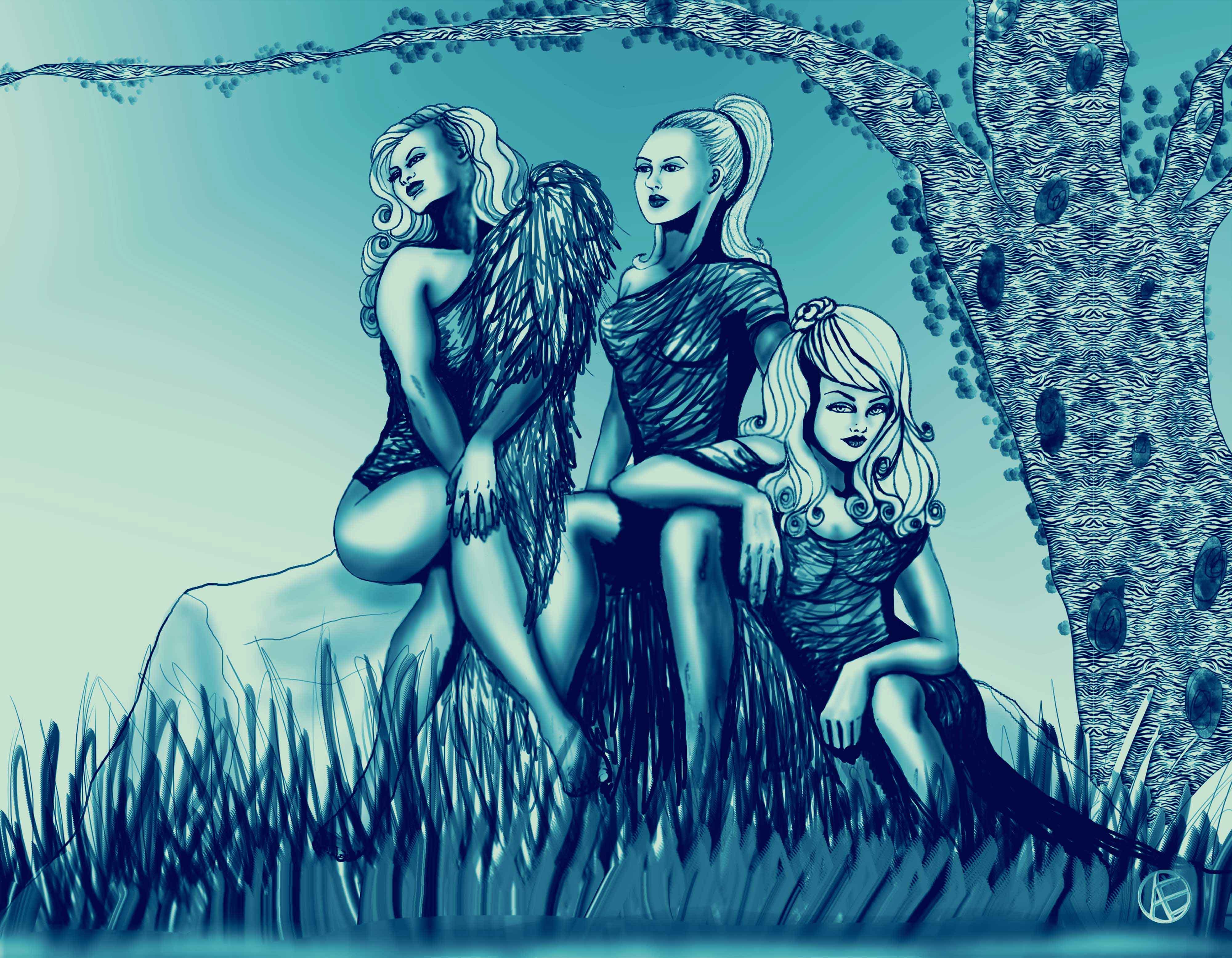
The Norns are a trio of female giantesses in Norse mythology who shape the destinies of both gods and humans. They’re similar to the Fates—or Moirai—in Greek mythology, but with a hard, Northern European edge: older, colder, and considerably less accommodating.
They sit beside Urðarbrunnr, the Well of Fate, beneath Yggdrasil, the World Tree, tending its roots and weaving the world tapestry from threads representing the lives of every person and deity. By drawing water from the Well, and packing clay around the trunk of the tree, they prevent its roots from rotting.
Urðr (Wyrd) represents the past. Her name is associated with fate, destiny, and that seemingly incidental collection of choices and events that brought you to this exact moment. She governs what has already been woven into the world tapestry. A fate once woven cannot be altered; your destiny must simply be met with courage.
Verðandi represents the present. Her name means “becoming,” making her the Norn of the eternal now, the point where possibility hardens into reality and your carefully laid plans collide with the cold, hard facts of life. Her name is derived from the Old Norse word “verða,” meaning to become.
Skuld represents the future. Her name translates as “debt” or “that which is owed,” suggesting that the future isn’t a blank slate so much as the bill that eventually comes due. In true Norse fashion, this is both factual and incredibly ominous. Skuld is unsurprisingly the most feared of the Norns.
While her two sisters weave the threads of destiny, Skuld often rides out onto the battlefield as a shield-maiden to determine who will die in combat, and to ferry the bravest of the slain to Valhalla, the VIP afterlife reserved for heroes.
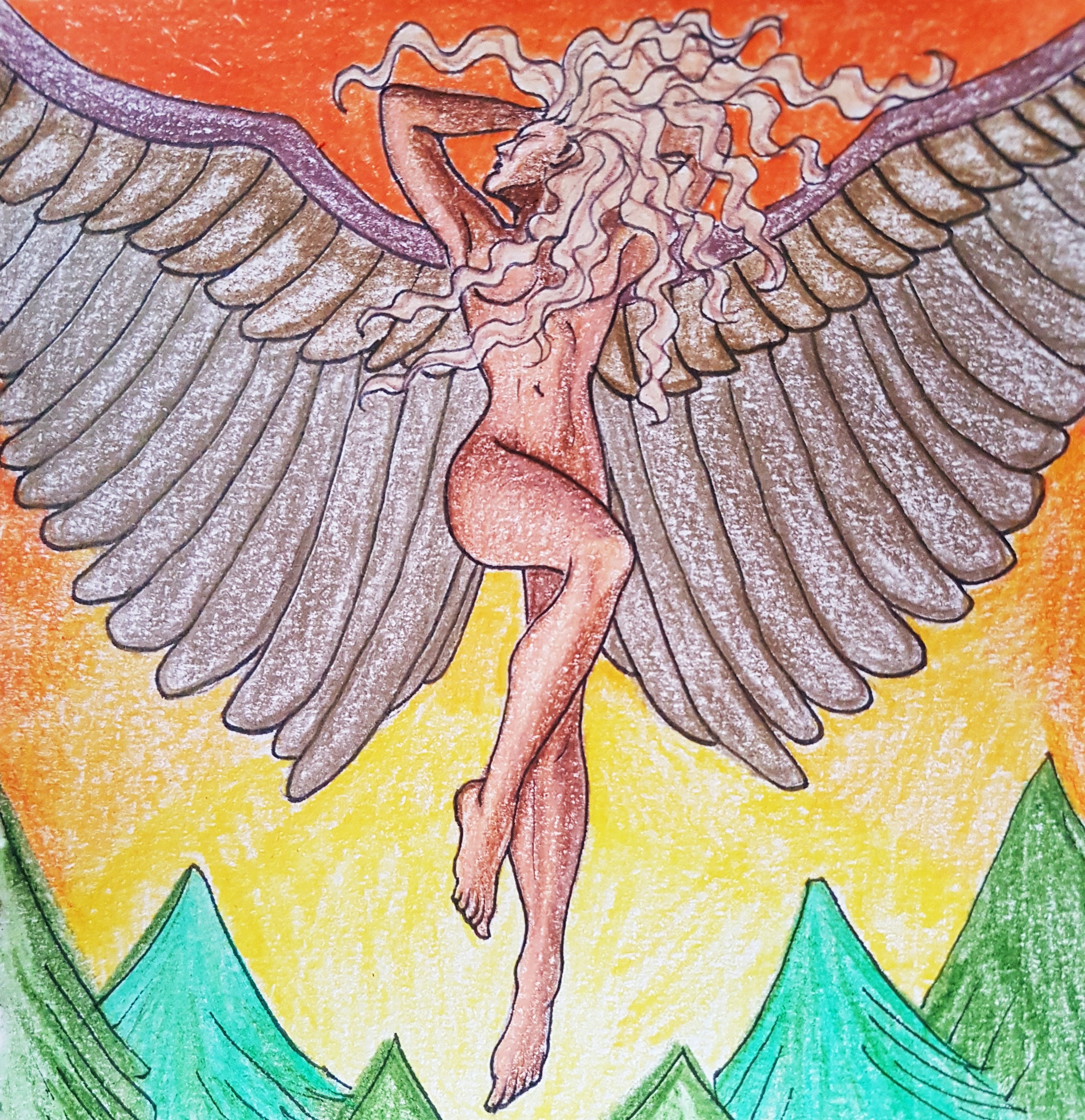
The Norns don’t merely predict the future, they create it. And gods are tied to their fates every bit as much as humans are. Even Odin, the Allfather, who sacrificed an eye for wisdom and, like so many patriarchs of ancient myth, was always looking for cosmic loopholes, couldn’t overrule them.
In the hands of the Norns, your fate isn’t just about what will happen to you. It’s about the tangled relationship between past, present, and future. It’s an ever-changing tapestry, and our lives are the strings that create it. Our life strings come in all shapes, sizes, and colors. They may be short or long, faint or bold, but they’re all woven together in infinite complexity.
The Future
The Norns would definitely disagree with Sarah Connor’s advice to her son in Terminator 2: Judgment Day: “The future's not set. There's no fate but what we make for ourselves.“
The Norns’ version of this modern aphorism might be something like, “The present is still being written, but the future and the past are intertwined. Not even the gods can escape their fate.”
The Norns in Popular Culture
The Norns appear quite often in modern books, movies, and TV shows, and even video games. This may be because they’re among mythology’s earliest examples of the idea that your future is shaped by your past and present choices, not just the whims of the all-seeing gods.
It’s a surprisingly modern concept, wrapped in a myth of three giant women sitting under a cosmic tree, quietly deciding the fates of gods and humans alike.
Götterdämmerung — (“Twilight of the Gods”) is an opera by Richard Wagner, first performed on August 17, 1876, which opens on the three Norns weaving the rope of destiny and discussing the fate of gods and mortals. It is one of the most famous modern retellings of the Norns outside the original myths.
American Gods — Neil Gaiman’s 2001 novel, on which the Bryan Fuller TV series was based, draws heavily on Norse mythology. In the TV show, the Norns tend the roots of the World Tree during Mr. Wednesday’s vigil, and help supervise Shadow Moon’s sacrificial hanging.
The Sandman — In the iconic comic book series, Neil Gaiman merges the three Fates of Greek mythology with the Norns and the Furies, so that the become a single entity, the ultimate triple goddess. They are omniscient sisters representing the Maiden, Mother, and Crone who spin, measure, and cut the threads of fate.
God of War Ragnarök — In this 2022 game, the Norns appear as powerful seers who challenge Kratos’ assumptions about fate and prophecy. The game’s interpretation is particularly clever because the Norns don’t simply predict the future through magic; they understand people so well they can anticipate their choices.
Assassin’s Creed Valhalla — Another popular role playing game that incorporates the Norns and the Well of Fate into its mythological storylines.
Vikings — This Norse themed TV series (2013-2020) frequently references fate, prophecy, and the woven destinies of its characters, echoing themes traditionally associated with the Norns.