

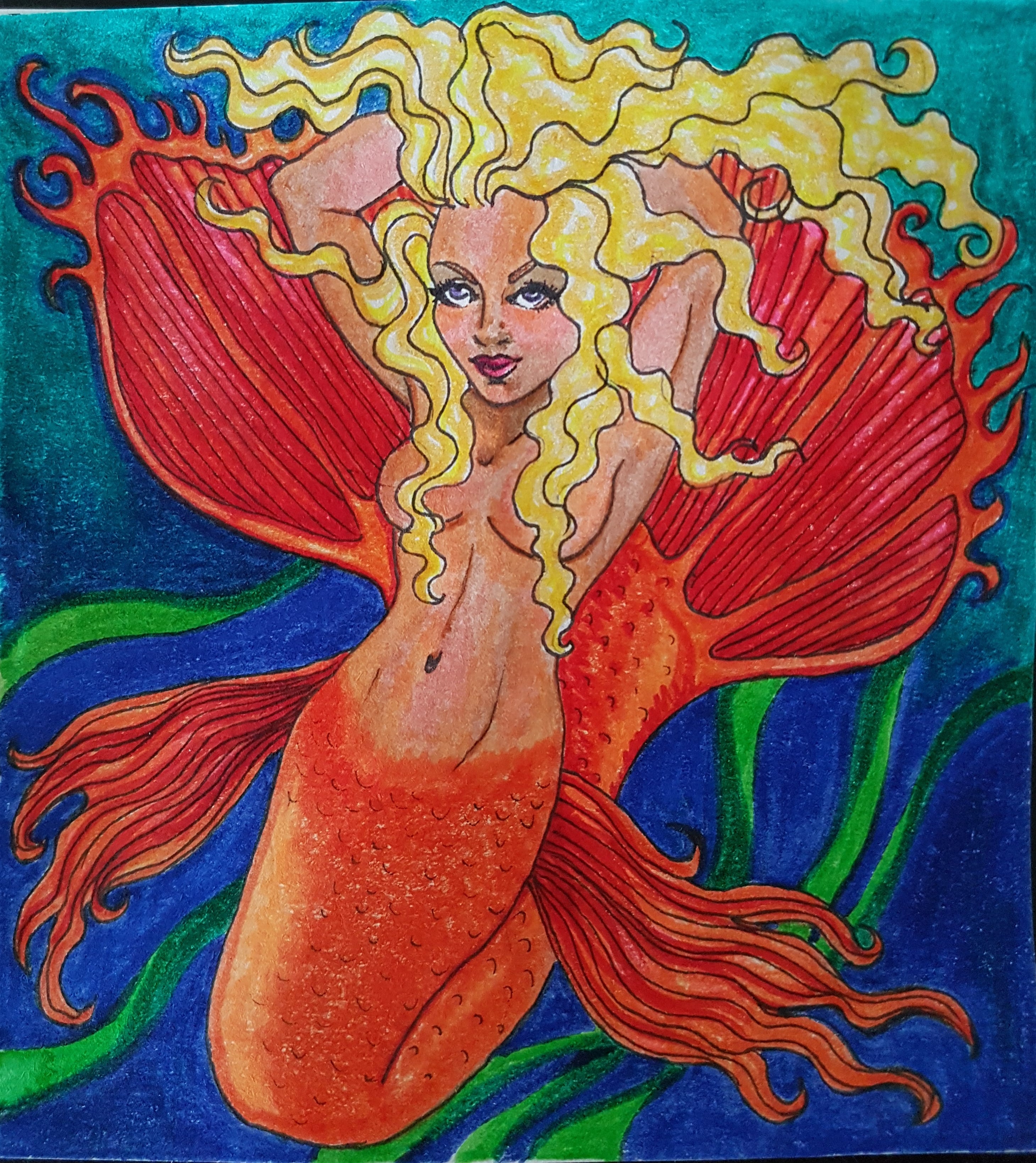
The myth of the mermaid has been with us since ancient times, with one of the oldest named versions being the Assyrian/Mesopotamian Atargatis, a fertility goddess and a symbol of love and protection with the face of a woman and the body of a fish.
Tales of half-woman, half-fish creatures that lived in the water date back much farther than that, with cuneiform tablets from the bronze age venerating various sea goddesses, and tales of shape-shifting water women in folk tales from all over the world.
Goddesses and Monsters
We’ve always been fascinated by the idea of shapeshifters and hybrids, from the half-human Egyptian deities like Horus and Anubis and the centaurs and sirens of Greek mythology, to stories of people transforming into animals like werewolves and birdmen.
While werewolves have become increasingly eroticized in the modern era (see True Blood, Twilight, Hemlock Grove, et al), their origins are pure body horror and existential dread. Similar to the gothic novel Jekyll and Hyde, it’s the idea that a mild-mannered man could suddenly transform into a monster, beyond reason and self-control, capable of committing atrocities, then waking to remember nothing.
Mermaids, on the other hand, occupy a complicated space between the magical and the malevolent. They’re the ultimate femme fatales; beautiful, graceful, luminous creatures of the sea, dwelling in an unknown and unknowable world where mortal man can’t follow—and yet, they beckon to us.
Sirens vs. Mermaids
The modern idea of the mermaid is often conflated with that of the siren, which were actually half-bird, half-female creatures from Greek mythology. They first appeared the Homer’s Odyssey, as beautiful disembodied voices that beckoned to Odysseus and his shipmates.
Although Homer didn’t give them a physical description, by the 7th century BC, they had entered the mythological lexicon as human-headed birds.
By the 3rd century BC, they had evolved into something more like the modern mermaid, with carved figures of human women with fishlike tails found on clay pots and bowls.
By the middle ages, mermaids were usually depicted as cautionary figures, tempting men to their doom, with the first usage of the English word "mermaid" appearing in 1390 in a tale by Chaucer. The word is a compound of mere, meaning sea, and maid, meaning young woman.
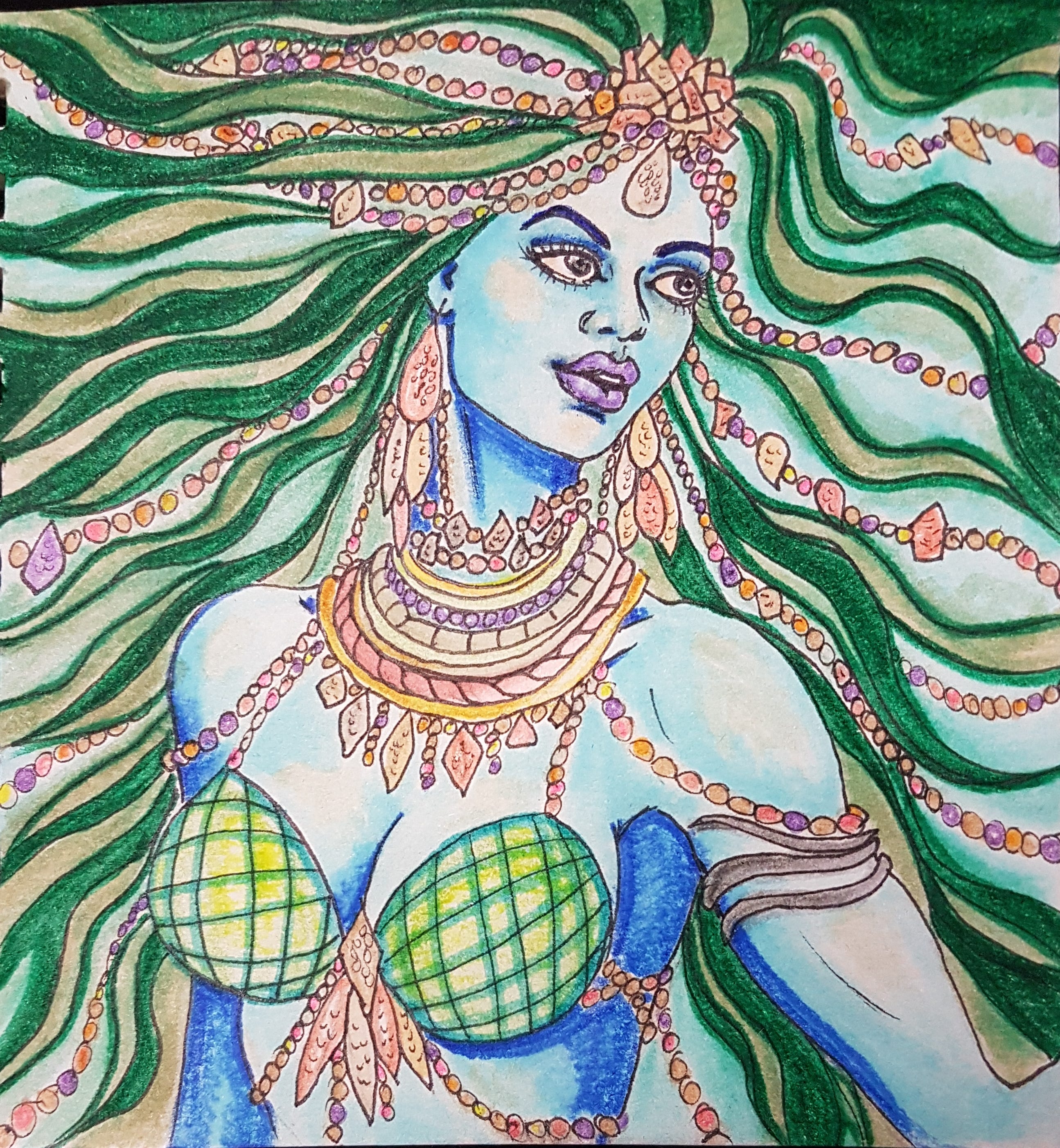
Dangers of the Deep
Throughout history, men went to sea, braving uncharted and treacherous waters to conquer foreign lands or bring back treasures from beyond the horizon. The seas were then, as now, filled with bounty but also fraught with danger.
Ancient maps were literally marked with images of sea serpents, warning travelers “here be dragons.” Mermaids are the flip side of that. Alluring and mysterious, their feminine appearance promises the comforts of home, but instead of the expected warmth of a woman’s touch, their lips are cold and their embrace, deadly.
It’s no surprise that tales of mermaids proliferated from ancient times through the age of exploration, as men sought to discover every corner of the world and chart the vast oceans. Shipwrecks were common, and the tales told by survivors often inextricable from fantasy, studded with sightings of monsters and mythical creatures.
Even Christopher Columbus reportedly claimed to have seen three mermaids off the coast of Hispaniola in 1493, noting that they weren't as beautiful as the legends would have you believe.
To which I would say, sir, those were manatees. Maybe lay off the rum, and try eating an orange once in a while.
Not Mermaids, But Close Enough
Sirens are not the only female creatures closely associated with the myth of the mermaids, not by a long shot. In ancient Greece alone, in addition to the birdlike sirens, there were the sea-monsters Scylla and Charybdis, who lived near the sirens, and were also female with fishlike attributes.
There were also naiads and water nymphs, who lived by the sea but did not have fish tails, sometimes considered to be the half-human offspring of the sea god Triton, products of his dalliances with human women.
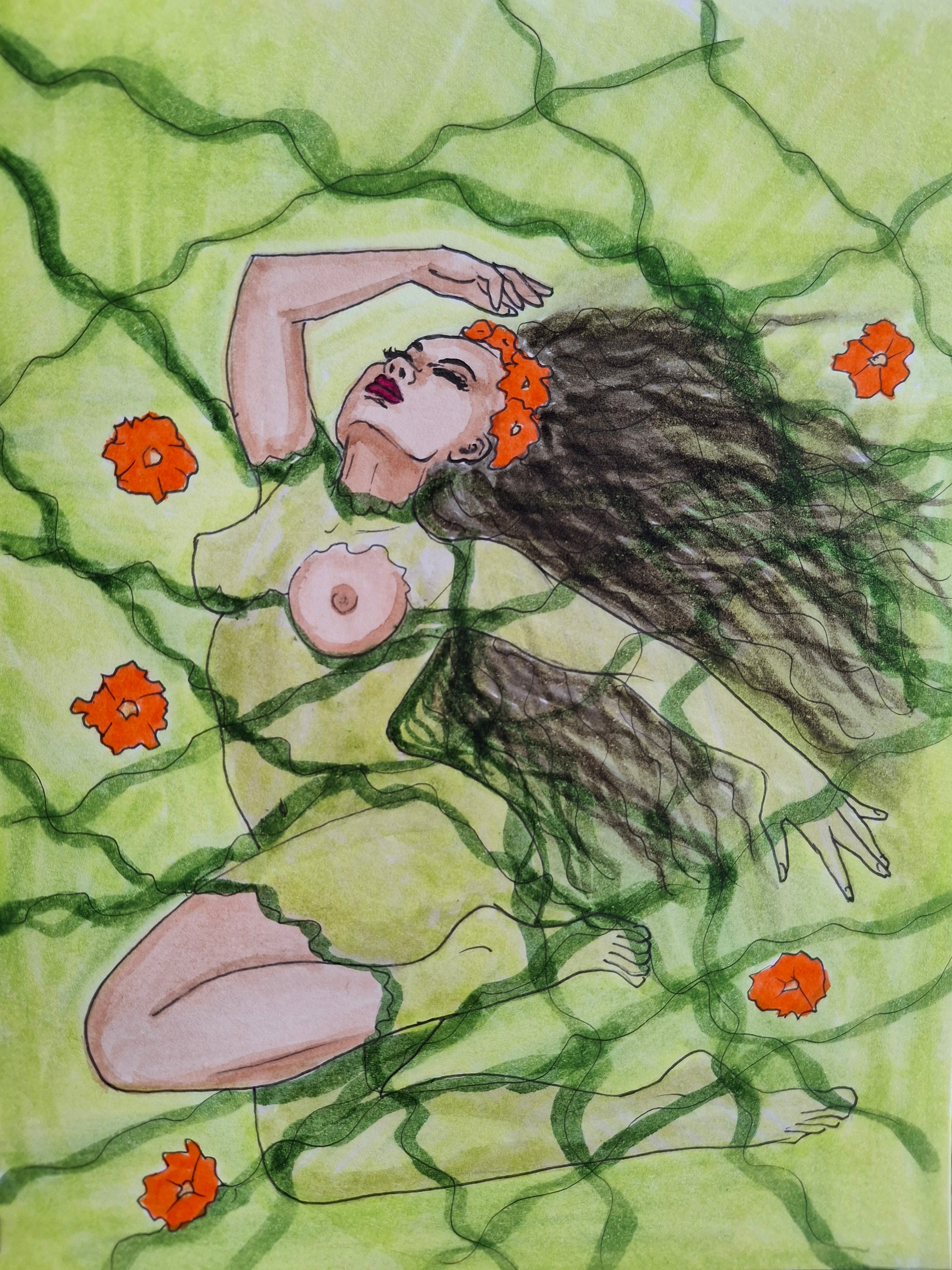
In countless cultural traditions, dangerous women can be found languishing by the water’s edge, tempting men with a good time and luring them to a watery grave.
The selkies of Ireland are shapeshifting seal-folk who shed their seal skin and come to shore naked and hungry for human companionship. Most of these stories are more sad than scary, however, as they often end with the selkie falling in love and bearing children before abandoning their families when the sea inevitably beckons them home.
The iara is a Brazilian water nymph or mermaid who lounges by the banks of the river, brushing her hair or singing in a beautiful, unearthly voice. Men who succumb to their charms are never seen again, often believed to have followed the iara to her underwater realm, willingly abandoning solid land, either for life or a blissful death by drowning.
In Slavic mythology, they are called Rusalki, deadly water spirits believed to be the restless souls of young women or unbaptized children who suffered a tragic, violent, or untimely death.
Atargatis to Ariel
So how did the mermaid archetype evolve from primordial goddess to birdlike/fishlike water hazard, to vaguely demonic femme fatale to romantic figure of longing to Disney princess and modern feminist icon of sexual liberation and fantasy cosplay favorite?
The pivot point seems to be the publication of Hans Christian Andersen’s fairy tale, “The Little Mermaid” in 1837. In case you’re not from around here, this is the story of a young mermaid who falls in love with a human prince and begs the sea-witch to turn her into a mortal girl.
The trade is her beautiful voice, and In the original story, the transformation comes with unimaginable pain as she struggles to walk on her new legs. The tale ends in tragedy because, of course it does—old timey fairy tales were the absolute worst.
She’s supposed to stab the prince with a magic knife on their wedding night, but can’t bring herself to do it, so she dissolves into foam and dies, but is later resurrected as a spirit of the air as a reward for her selflessness. She doesn’t get the guy in the end.
In the Disney version—spoiler alert—she vanquishes the sea-witch and marries the prince, and ostensibly lives happily ever after.
But the modern mermaid tale that first sparked my interest in the genre was none other than Splash, the 1984 fantasy rom-com starring Daryl Hannah and Tom Hanks.
These days, mermaids are a staple of online cosplayers like Charity Grace, and tourist attractions featuring underwater performances with elaborate costumes. The lack of female genitalia somehow became a feature, not a bug, symbolizing self-possession and inviolability.
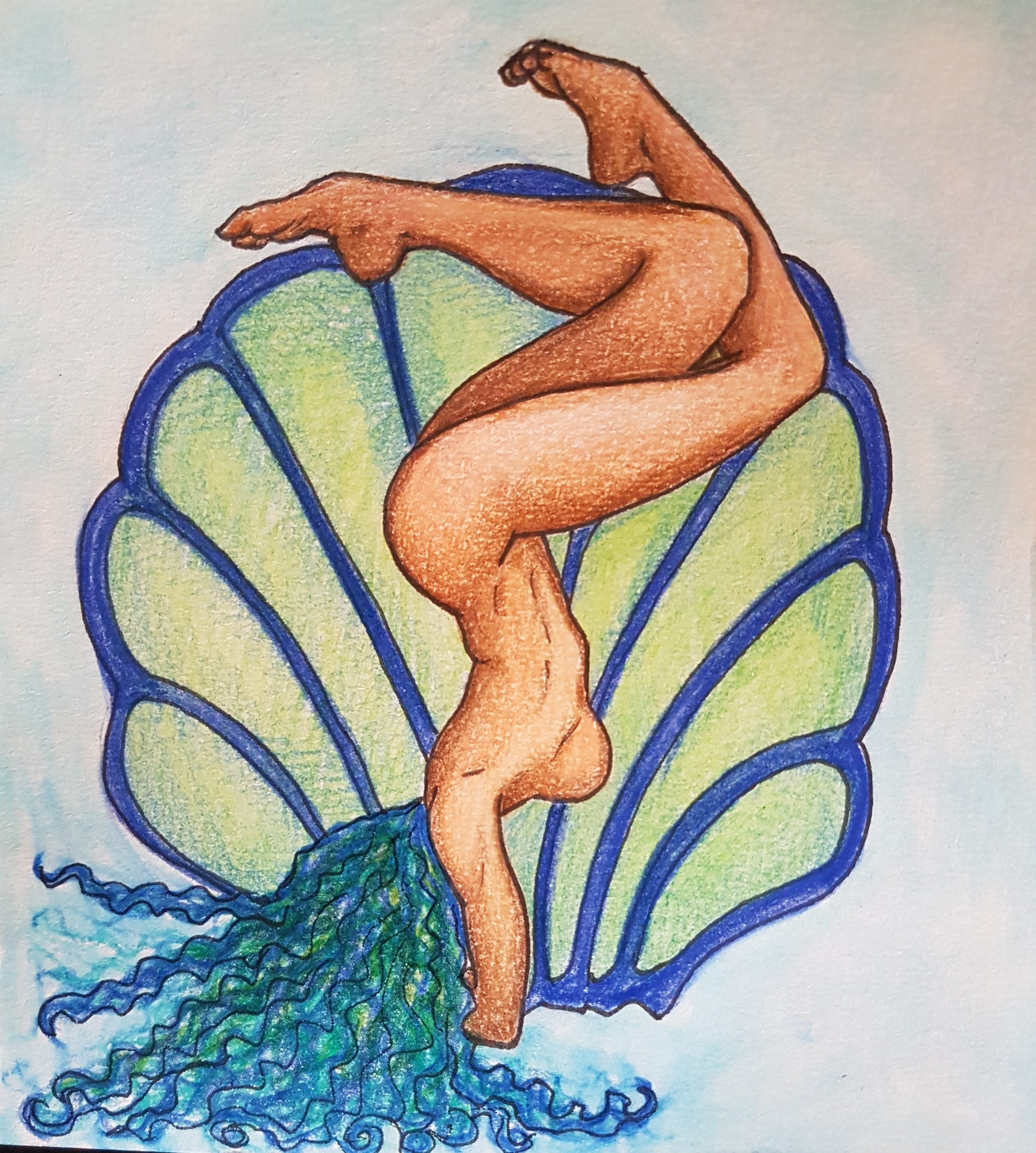
Song of the Sirens
Next weekend, I’ll be taking on the role of sea siren in a video performance choreographed by Melody Mangler, featuring a bevy of beautiful creatures filmed on the beach half in and half out of the water.
We’ve been rehearsing and putting our costumes together for the last few weeks, and early next Saturday morning we’ll be filming at an undisclosed location. I’ll share the video as soon as it’s available, some time in the next few weeks.