

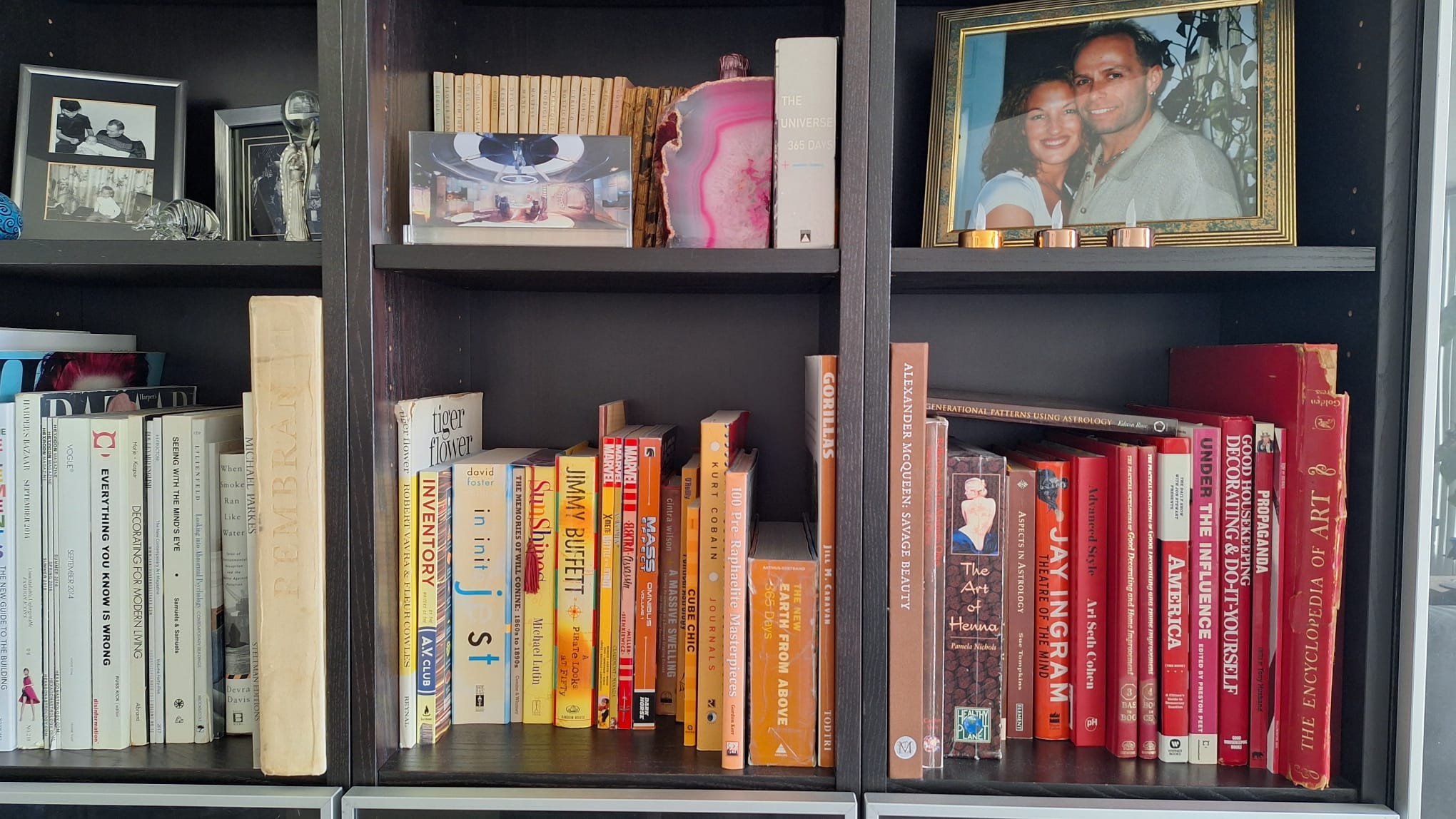
I read a lot of books. An entire wall in my living room consists of a massive bookcase stacked from floor to ceiling with hundreds of books, almost exclusively non-fiction. I spend my daily workout and my twice weekly hour-and-a-half commute to the office with my headphones on, listening to audiobooks.
I use the Libby app from my local library to download audiobooks, as well as Spotify Premium (although their monthly limit of 15 hours of listening time enrages me). The Libby app recently began keeping a timeline so you can go back and see how many books you’ve checked out every year, and my annual tally since 2018 hovers between 100 and 150.
Which is not to say I actually finish all those books, which would be almost impossible… I mean, there are 52 weeks in a year, so that would mean I’m averaging 2-3 books a week… Okay, that’s actually very possible. LOL But I also listen to a lot of podcasts and binge a lot of TV, so it’s safe to assume I’m abandoning quite a few of those books mid-listen.
Nonfictionado
For years, I was a strict non-fiction snob. It’s not that I didn’t respect fiction, but for me it’s the same as listening to music, which I also have trouble doing unless I’m at a show watching a band I like, or at a club dancing. For me to enjoy it, it has to match my mood perfectly or it’s just frustrating noise, not entertainment.
With the best non-fiction, you’re carried along by a single point of view, which unfolds and educates you about a compelling niche reality, revealing and exploring a topic in depth and leaving you smarter and more well-rounded, like a trip to a foreign country.
Some of my favorite audiobooks of all time are explorations of subject matter I never would have considered interesting before I read them. Five perfect examples are:
Fire Weather by John Valliant — I wrote about this amazing book last year. It chronicles the 2016 Fort McMurray wildfire, and delves into the geology of the Alberta oil sands and the history of our relationship with fire, before laying out all the reasons they're becoming more and more disastrous and unpredictable. The writing is excellent, and it reads more like a propulsive apocalyptic novel than nonfiction.
The Whale Warriors by Peter Heller — A gripping account of the author’s ride-along with Sea Shepard Conservation Society, the radical conservationist org created by environmentalist icon and great spirit bear incarnate, Paul Watson.
The Immortal Life of Henrietta Lacks by Rebecca Skloot — Long before it was turned into a movie starring Oprah Winfrey, this book is one of the best examples of novelistic nonfiction, revealing insane facts that seem impossible but are 100% scientific truth, layering mystery upon revelation, character conflicts and resolutions, leaving you intellectually enriched without letting your attention lapse for a moment.
The Wave: In Pursuit of the Rogues, Freaks, and Giants of the Ocean by Susan Casey — An investigation of massive rogue waves, which were once elusive to the point of being doubted by the scientific community. Casey’s research combined with accounts of surfers and sailors who encountered them reads like an adrenaline-fuelled adventure novel.
Almost any book by Annie Jacobsen. I wrote about Nuclear War: A Scenario last year, but if you’re not in the mood to be scared shitless about the more-present-than-ever threat of global nuclear annihilation, I would recommend you start with Area 51: An Uncensored History of America's Top Secret Military Base.
Have We Strip-Mined Reality?
Somewhere along the way over the last few years, nonfiction started to feel less like a goldmine of historical and scientific revelations and more like an algorithmic formula. I blame Malcolm Gladwell and the Freakonomics guys. Just kidding… but not really.
They were at the forefront of the nonfiction renaissance of the mid-2000s, with blockbusters like Blink and The Tipping Point gaining a huge audience and making social science a wildly popular genre, the hot new beach read for anyone who wanted to feel smart while being entertained.
The genre is still thriving 20 years later, but the new offerings are less about revealing cool hidden connections that unlock the mysteries of life, our bodies and brains, the hidden levers of society and history, or whatever, and more about optimizing your life.
Legions of copycat social science writers flooded the market, all but ruining reality-based writing, commodifying and flattening the genre that once felt like a life hack, into, well, just hackery. (Also, “life hacks,” ugh.)
It’s the fitness bro-ification of popular nonfiction.
Back to the Fiction
So lately I’ve found myself reading fiction again, but it’s been a bumpy ride. I have way less patience for badly written fiction than nonfiction, and a vibe mismatch is an instant deal-breaker.
All through high school and college, I read a ton of science fiction. Authors like Philip K. Dick and Robert Heinlein were among my favorites, and I was constantly searching the library for new material, and bringing home stacks of weathered paperbacks from used bookstores.
In the days before online bookstores and libraries, downloadable audiobooks and easy access to thousands of reviews to help shape your reading list, finding good books was a total crapshoot.
But used books were so cheap, it didn’t matter if only one in five were a hit. I could take the misses back and trade them in for credit on my next visit. Finding a new author I clicked with wasn’t just the ultimate dopamine hit, it unlocked a new side quest: find everything they’ve ever written and read them all!
Thank god for the internet and AI
With Libby, Amazon, Goodreads and now, AI, it’s never been easier to find books, movies and TV shows perfectly matched to your exact taste profile. Some of my most interesting and helpful conversations with ChatGPT have been those where I gave it examples of books or shows I loved, and asked for recommendations.
Here are some of my favorite recent fiction reads:
Dark Matter, Recursion, Run, and Upgrade by Blake Crouch
Wool, Shift, and Dust by Hugh Howey (and Silo, the excellent TV adaptation)
Stories of Your Life and Others by Ted Chiang
What’s on your nightstand, beach bag, or headphones these days? Tell me in the comments!
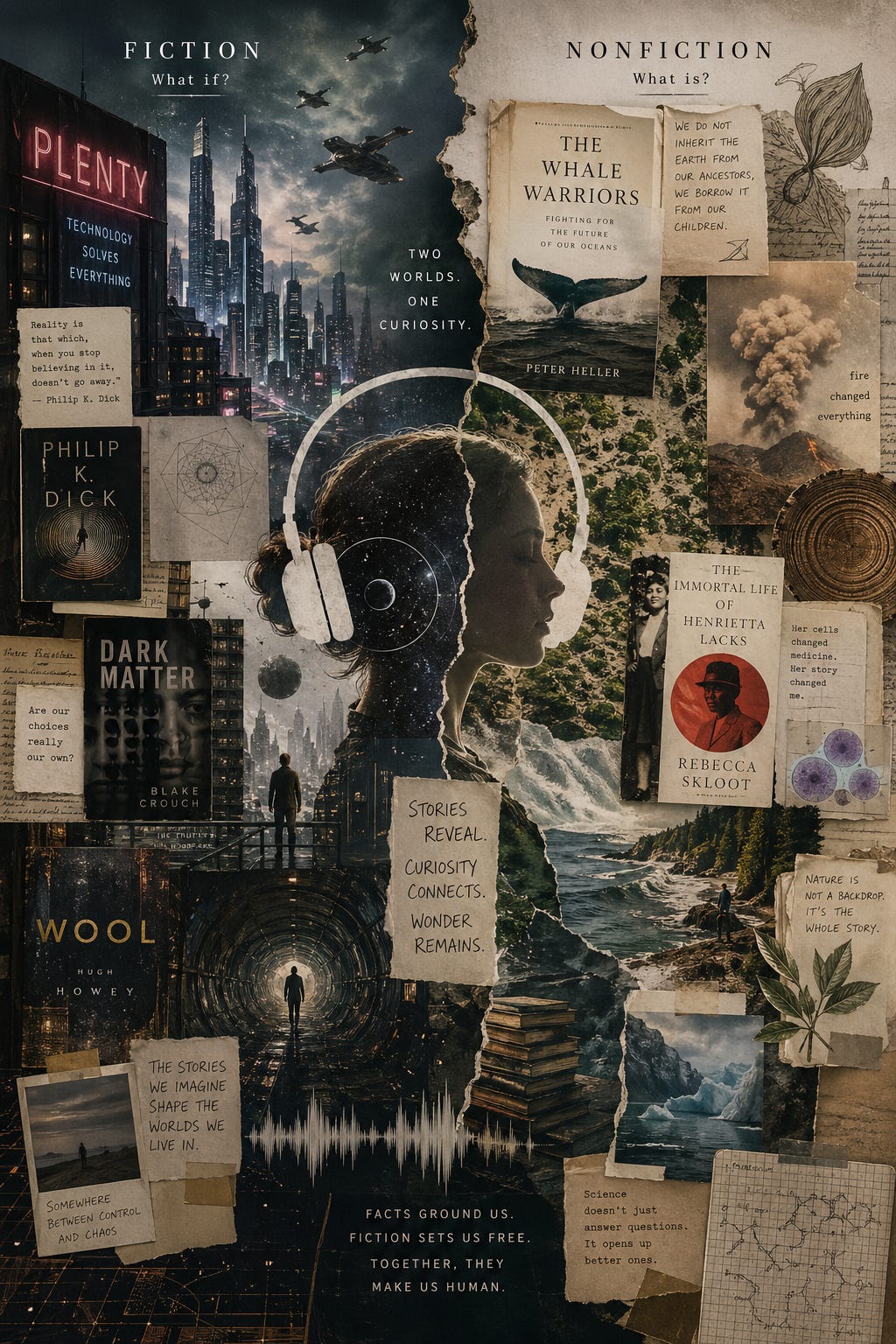
Collage by ChatGPT